
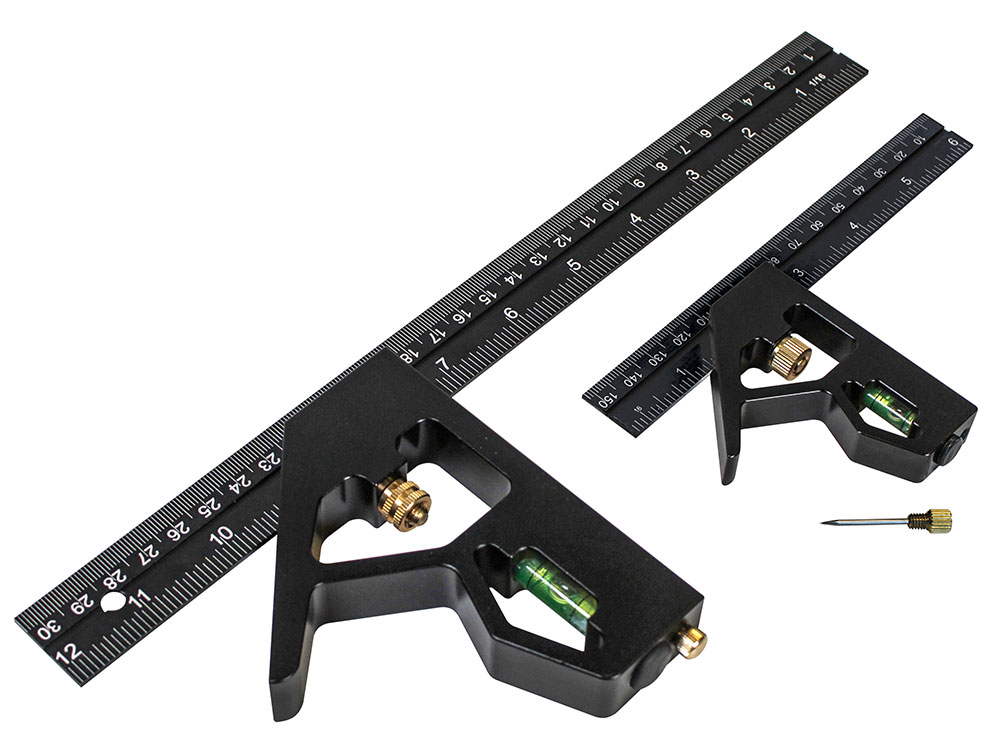
Finding the Best Combination Square: Reviews and Guide
A combination square is an indispensable tool for carpenters, woodworkers, and DIY enthusiasts alike. It combines multiple measurement and marking features into a single tool, making it an essential item in any workshop. With countless options available on Amazon, we’ve curated a list of the five best combination squares that offer exceptional accuracy, durability, and versatility. In this article, we’ll explore each of these top-rated products, discuss their applications, provide guidance on their usage, and outline the pros and cons of each.
Our Top Picks for Best Combination Square
Starrett 11H-12-4R 12-Inch Combination Square


The Starrett 11H-12-4R is a true icon in the world of combination squares. Its 12-inch hardened steel blade offers superior precision and longevity. The square head features a spirit level and a hardened scriber for marking precise lines. The reversible lock bolt allows for quick and secure adjustments. This versatile tool is ideal for layout work, squaring up stock, and checking 45-degree angles. However, its premium quality comes with a higher price point.
Pros:
- Superior precision
- Durability
- Versatile applications
Cons:
- Higher price point
Swanson Tool TC132 12-Inch Combination Square


The Swanson Tool TC132 is an excellent choice for budget-conscious individuals without compromising on quality. Its stainless steel blade is rust-resistant and features both metric and imperial measurements. The square head incorporates a level and a removable scribe, enhancing accuracy and convenience. With its affordability and reliable performance, this combination square is perfect for woodworking, metalworking, and general DIY projects.
Pros:
- Affordable
- Stainless steel blade
- Convenient features
Cons:
- Limited advanced features
IRWIN Combination Square, 12”, 45-90 Degree Marking, Stainless Steel (1794469)


The IRWIN Combination Square offers an impressive array of features at an affordable price. Its 12-inch hardened stainless steel blade is etched with clear and precise markings. The square head includes a level, a scribe, and a spirit level vial, ensuring precise measurements and marking. The fine-adjustment knob enables easy and secure locking. This combination square is suitable for a wide range of applications, from carpentry and metalwork to woodworking and layout work.
Pros:
- Affordable
- Stainless steel blade
- Precise measurement
Cons:
- Some users report difficulty with the lock screw adjustment
Mr. Pen- Rafter Square and Combination Square Tool Set


The Mr. Pen Combination Square is a reliable and accurate option for professionals and hobbyists. The tempered steel blade is etched with precise graduations that resist wear and tear. The square head incorporates a spirit level and a scribe for increased functionality. The lock screw provides secure positioning, and the 45-degree miter allows for versatile applications. This durable combination square is an excellent choice for woodworking, machining, and layout tasks. BONUS: It comes with a rafter square as part of the set.
Pros:
- Durable
- Accurate graduations
- Versatile applications
Cons:
- Limited additional features
WORKPRO Rafter Square and Combination Square Tool Set


The WORKPRO Combination Square is renowned for its exceptional accuracy and durability. The 12-inch stainless steel blade boasts high-visibility markings, making it easy to read in various lighting conditions. The square head features a scribe, a spirit level, and an onboard storage area for small items. The thumb screw ensures quick and precise adjustments. This combination square excels in woodworking, metalworking, and framing applications. BONUS: Like the Mr. Pen Combination Square, this product also comes with a bonus rafter square.
Pros:
- Exceptional accuracy
- Durable
- High-visibility markings
Cons:
- Comparatively higher price
Conclusion
Investing in a high-quality combination square is crucial for achieving precise measurements, ensuring squareness, and enhancing the accuracy of your woodworking or metalworking projects. Each of the five combination squares discussed above offers unique features to cater to various budgets and needs. Whether you opt for the renowned accuracy of the Starrett 11H-12-4R or the affordability of the IRWIN Combination Square, you can be confident in the quality and performance of these top-rated combination squares available on Amazon.
What Makes a Good Combination Square?
When selecting a combination square, there are several important factors to consider. Here are the key features to look for:
- Blade Material and Length: The blade is a critical component of a combination square. Look for a square with a blade made of high-quality material such as hardened steel or stainless steel. These materials offer durability and resistance to wear and corrosion. The length of the blade typically ranges from 6 to 12 inches, and the choice depends on the scale of your projects and the level of precision required.
- Graduations and Markings: Clear and precise markings on the blade are essential for accurate measurements. Look for a combination square with well-etched graduations that are easy to read. Both metric and imperial measurements are commonly available, so choose the one that aligns with your preference and project requirements.
- Square Head Features: The square head of a combination square often includes additional features to enhance functionality. These may include a spirit level vial for checking levelness, a scribe for marking lines, or a 45-degree miter for angle measurements. Consider which features are important for your specific applications.
- Locking Mechanism: A secure locking mechanism is crucial to hold the blade and square head in place during measurements. Look for a combination square with a reliable locking mechanism that allows for easy and precise adjustments. A thumb screw or a lever lock are common types of mechanisms used.
- Build Quality and Durability: A combination square should be sturdy and built to withstand regular use. Check for solid construction, robust materials, and a solid feel in your hand. This ensures longevity and accuracy in your measurements over time.
- Price and Budget: Combination squares are available at various price points. Consider your budget and the level of quality and features you require. While premium options may offer exceptional precision, more affordable alternatives can still provide satisfactory performance for general woodworking or DIY projects.
- User Reviews and Ratings: Before making a purchase, read customer reviews and ratings on Amazon or other trusted platforms. Pay attention to feedback regarding accuracy, durability, and overall user satisfaction. Real-life experiences from other users can provide valuable insights into the performance and reliability of a combination square.
By considering these factors, you can make an informed decision and choose a combination square that meets your specific needs, ensuring accurate measurements and enhancing the quality of your projects.
Unlocking the Versatility: Exploring the Applications of a Combination Square
- Measuring and Marking: One of the primary uses of a combination square is measuring and marking. The straight blade, marked with clear and precise graduations, allows for accurate measurements of lengths, widths, and depths. Whether you need to mark out dimensions on wood, metal, or other materials, a combination square ensures consistency and precision. Its square head often includes a scribe, enabling the user to make accurate layout lines for cutting, drilling, or mortising.
- Checking Squareness: Maintaining squareness is crucial in many projects, such as furniture making, cabinetry, and construction. A combination square excels at checking and ensuring squareness. By placing the blade along one edge and sliding the head against another, you can determine if the two edges are perfectly square. This capability is essential for aligning corners, checking the accuracy of mitered cuts, and verifying the perpendicularity of structures.
- Marking and Checking Angles: The combination square’s square head often includes a 45-degree miter feature, enabling the marking and checking of angles. This is particularly useful in carpentry, metalworking, and other applications where precise angles are required. Whether you’re cutting bevels, fitting joints, or verifying the accuracy of existing angles, a combination square simplifies the process and ensures consistent results.
- Setting and Transferring Heights: A combination square can be used to set and transfer heights accurately. By locking the head at a desired height on the blade, you can use it as a reference point for consistent measurements. This is particularly useful when setting the depth of a saw blade, marking consistent heights on multiple workpieces, or aligning elements in a project that require uniform positioning.
- Checking and Marking Centerlines: A combination square can help identify and mark the centerline of a workpiece accurately. By aligning the blade with two opposite edges or corners, the square can locate the exact center. This feature is valuable in various applications, including positioning hardware, aligning drill holes, or ensuring symmetrical layouts.
- Creating Parallel Lines: Parallel lines are essential in tasks like dado cuts, drawer construction, and shelf installation. With the combination square, you can easily create parallel lines by using the blade to measure and transfer distances accurately. This ensures precise alignment and consistent results throughout your projects.
A Step-by-Step Guide on How to Use a Combination Square
Step 1: Familiarize Yourself with the Components
Take a moment to understand the different parts of the combination square. It typically consists of a straight blade, a square head, a locking mechanism, and additional features such as a spirit level and a scribe.
Step 2: Set the Blade
Extend the blade to the desired length by loosening the locking mechanism. Slide the blade out to the desired position, aligning it with the measurement markings on the square head. Tighten the locking mechanism to secure the blade in place.
Step 3: Checking Squareness
To check for squareness, place the blade flat against one edge of the material. Slide the square head along the adjacent edge while ensuring that both the blade and the head are in contact with the material. If the blade and head align perfectly with the edges, the material is square. Adjust as necessary for accuracy.
Step 4: Measuring and Marking
To measure a distance, place the combination square on the material with the blade aligned to the starting point. Slide the square head to the desired measurement, aligning it with the appropriate markings on the blade. Make sure the square is held firmly against the material to ensure accuracy. Once aligned, use a pencil or scribe to mark the measurement on the material.
Step 5: Checking and Marking Angles
To check or mark angles, use the miter feature on the square head. Loosen the locking mechanism and adjust the square head to the desired angle, aligning it with the appropriate angle markings on the blade. Tighten the locking mechanism to secure the angle. You can now check or mark the angle on your workpiece using the square head as a guide.
Step 6: Using the Spirit Level
If your combination square has a spirit level, it can be used to check for levelness or to ensure that a surface is horizontal or vertical. Place the square on the surface, ensuring that the spirit level vial is in view. Adjust the surface until the bubble in the vial is centered, indicating a level or plumb position.
Step 7: Utilizing the Scribe
If your combination square has a scribe, it can be used to mark lines or create reference points. Adjust the scribe to the desired length by loosening the locking mechanism and sliding it in or out. Tighten the locking mechanism to secure the scribe. Use the scribe to mark lines on the material by running it along the edge while keeping the square head pressed against the material.
Step 8: Maintenance and Care
After use, wipe the combination square with a clean cloth to remove any debris or moisture. If necessary, lubricate the moving parts with a light machine oil to ensure smooth operation. Store the combination square in a clean and dry place, away from excessive heat or humidity.
By following these steps, you can effectively utilize a combination square to achieve accurate measurements, check for squareness, mark angles, and enhance the precision of your woodworking, metalworking, or DIY projects. Practice using the combination square regularly to become more comfortable and proficient with its features.
Frequently Asked Questions
What is the most versatile square?
When it comes to versatility, one of the most widely regarded squares in woodworking is the combination square. The combination square combines the functionality of multiple measuring and layout tools into a single, versatile tool. It typically consists of a main body, a ruler or blade, and interchangeable heads or attachments.
Here are some reasons why the combination square is considered highly versatile:
- Measurement Capabilities: The combination square usually features a ruler or blade with clear markings for precise measurements. It allows you to measure both length and depth accurately, making it useful for a wide range of woodworking tasks.
- Right Angle Verification: Like a frame square, the combination square can establish and verify right angles. The main body of the square has a 90-degree angle that can be used to check the squareness of corners or edges.
- Adjustable Heads: Combination squares often come with interchangeable heads or attachments. These include a scribe, a center-finding head, a protractor head, or a 45-degree miter head. These additional heads extend the functionality of the square, enabling it to perform various marking, layout, and angle-measuring tasks.
- Guiding Cuts: Some combination squares feature a built-in saw guide or saw slot. This allows you to guide a hand saw or a circular saw along the square’s edge, ensuring straight and accurate cuts.
- Level and Plumb Indicators: Certain combination squares have built-in level vials or bubble levels. This feature enables you to check for levelness and plumbness, ensuring that your work is accurately aligned and positioned.
- Portable and Compact: Combination squares are typically compact and easy to carry, making them suitable for on-the-go woodworking or jobsite tasks. Their versatility eliminates the need for carrying multiple tools, reducing clutter and enhancing efficiency.
While combination squares offer great versatility, it’s important to choose a high-quality one that maintains accuracy and durability over time. Look for combination squares made from robust materials, with clear and durable markings, and precise adjustment mechanisms for the heads.
In summary, the combination square’s ability to measure, mark, establish angles, guide cuts, and incorporate additional attachments makes it one of the most versatile squares in woodworking. It is a go-to tool for woodworkers of all levels, offering functionality and convenience in a single package.
What is the best size combination square?
The best size of a combination square depends on the specific tasks you will be undertaking and the scale of your projects. Combination squares are available in various blade lengths, commonly ranging from 6 inches to 12 inches, although longer blades can be found as well.
For general woodworking or DIY projects, a 12-inch combination square is often considered a versatile option. It offers a good balance between being compact enough for smaller tasks and providing sufficient length for larger projects. The longer blade allows for measuring and marking longer distances with ease, while still maintaining accuracy.
If you primarily work on smaller-scale projects or require more portability, a 6 to 8-inch combination square may be suitable. These compact sizes are convenient for precise measurements and marking in tight spaces or for finer work. They are commonly used in tasks like jewelry making, model building, or small-scale carpentry.
In specialized fields, such as metalworking or machining, where precise measurements and accuracy are crucial, combination squares with longer blades, such as 12 inches or longer, may be preferred. These longer blades provide increased accuracy when measuring larger workpieces or when dealing with more complex layouts.
Ultimately, the best size of a combination square depends on your specific needs, the type of projects you undertake, and your personal preferences. It can be helpful to consider the scale of your typical work, the level of precision required, and the practicality of handling a larger or smaller tool. Having multiple combination squares of different sizes in your toolbox can also provide flexibility and accommodate a wide range of tasks.
editor's pick

news via inbox
Stay one step ahead with exclusive tips, guides, and offers delivered directly to your inbox.
Sign up for our newsletter and elevate your home improvement game today!